How Much Food Should You Order for a Group? A Sushi and Hibachi Catering Guide
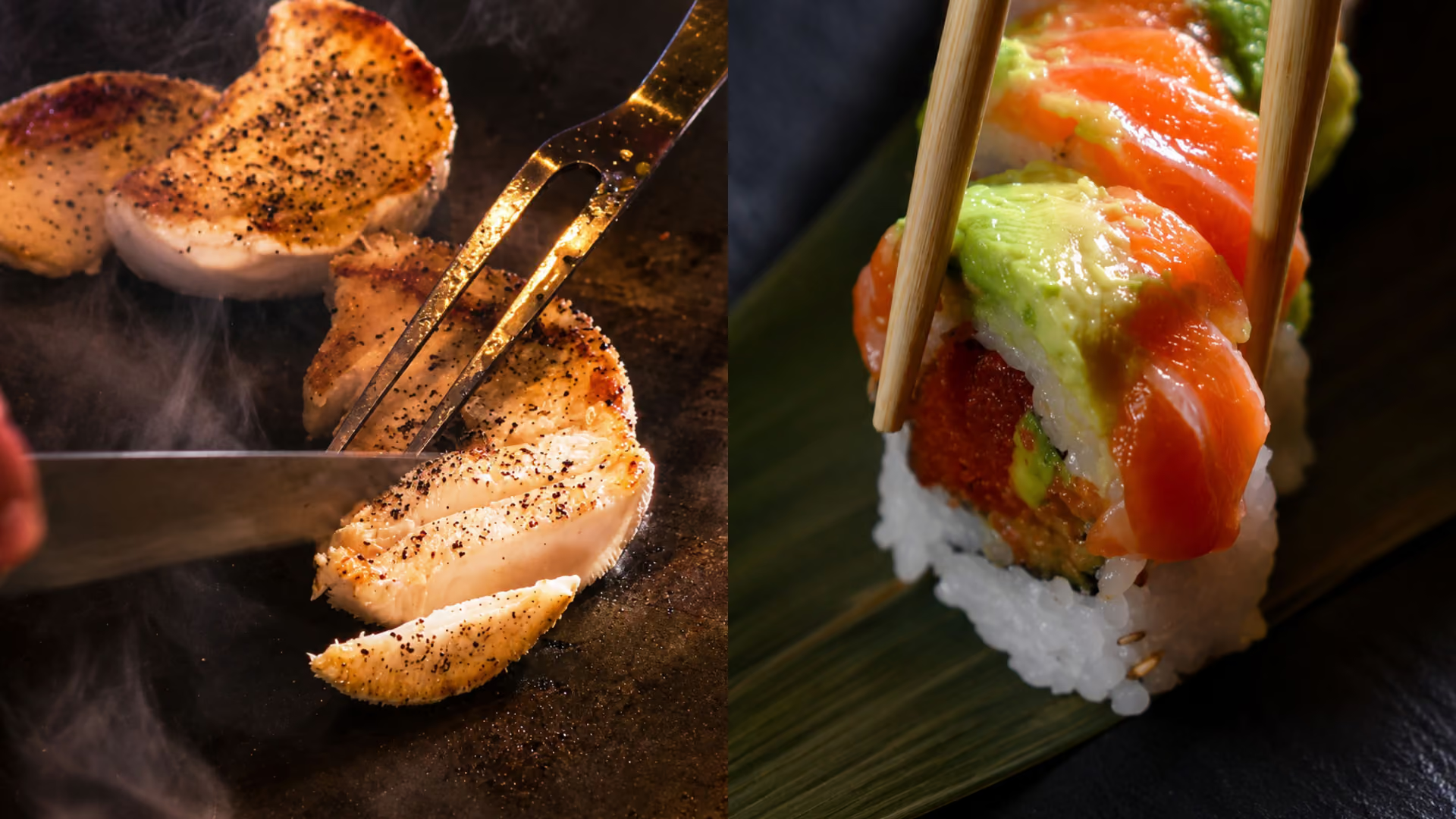
The most common catering question is also the hardest to answer with one number: how much food should you order? A group of ten children, ten office workers at lunch, and ten adults at a long evening party can have completely different appetites.
The better way to plan Sushi and Hibachi catering is to combine the restaurant's stated serving sizes with four factors: how long the event lasts, whether the food is the full meal, how many different dishes you are serving, and how adventurous the group is. Masu Sushi & Hibachi publishes serving guidance on its catering menu, which gives you a useful baseline.
Start with the restaurant serving sizes
Masu currently lists many sushi roll trays as serving four. Several fish-focused party trays are listed for six, and the Oceanside Party Tray is listed for ten. Most hibachi protein and side trays are listed for six.
Use those numbers as the starting point rather than inventing your own portion math. The restaurant knows how much food is included in each tray. Your job is to decide how many different trays the group needs around that baseline.
Then ask whether the food is the whole meal
If Sushi is the only food at dinner, guests will naturally eat more of it. If the buffet includes appetizers, sushi, Hibachi protein, rice, noodles, vegetables, and dessert, each individual tray can serve its stated role as part of a larger spread.
This is why simply multiplying the guest count by one fixed number of sushi pieces is not always useful. The rest of the menu changes the answer.
Lunch and dinner groups can eat differently
A quick office lunch often has a defined start and end. People eat, talk for a short period, and return to work. An evening Special Event may last several hours, which gives guests more time to snack, return to the buffet, and eat again.
If food will stay central to the event for a long period, discuss timing and food-handling instructions with the restaurant. Sushi and hot foods both need appropriate handling, and you should follow pickup and service guidance rather than leaving food out indefinitely.
More menu variety usually means less of each item
Imagine serving one sushi tray to a group of four with no other food. That tray carries the whole meal. Now imagine the same group has an appetizer, a sushi tray, hibachi chicken, fried rice, vegetables, and dessert. The sushi is only one part of the plate.
This is where planners often over-order. They calculate every tray as if it must feed the full guest count independently. A better approach is to think about the plate as a whole.
Plan around appetite types
Every group has light eaters, average eaters, and people who arrive hungry. You cannot predict each plate, but you can identify the nature of the event. A post-meeting lunch may be average. A sports-team dinner may run heavier. A cocktail-style gathering with other snacks may run lighter.
When the event matters and running out would be disruptive, a modest buffer is usually more practical than ordering to the exact theoretical serving count. For a smaller casual gathering, you may prefer to stay closer to the restaurant's guidance and add only if necessary.
How to balance sushi and hibachi in one order
For mixed groups, make Hibachi the warm foundation and Sushi the variety layer. Choose one or two hot proteins, one starch, vegetables, and then enough sushi variety to give guests multiple choices.
If the group is made up of enthusiastic sushi diners, reverse the emphasis. Use larger fish-focused or roll trays as the center of the meal and add one or two hot sides for guests who want something cooked.
Do not forget vegetarian and low-spice choices
A catering order can look abundant and still leave one guest with almost nothing. Include at least one clearly vegetarian direction and one milder option if you are feeding a mixed office or family group.
Masu's catering menu currently includes a vegetable-focused roll tray, edamame, vegetable tempura, hibachi vegetables, and other sides. Confirm current ingredients with the restaurant if a dietary restriction is strict.
Example planning logic for common events
Small family gathering
Use the published serving sizes and choose a few complementary items rather than every category. One classic sushi direction, one contrasting option, and a hot side or protein may be enough depending on appetite.
Office lunch
Aim for a complete plate. Sushi plus a hot protein, rice or noodles, and vegetables gives employees choices without requiring an excessive number of trays.
Corporate parties or a special event
For larger Corporate parties, build in more variety and a modest quantity buffer. The group is less predictable, and you may have guests returning to the buffet over a longer period.
What to confirm before placing the order
- Final or realistic guest count.
- Whether the meal is lunch, dinner, or light refreshments.
- Whether sushi is the main meal or one category in a larger spread.
- Vegetarian, allergy, and spice requirements.
- How long the event will run.
- Pickup time and food-handling guidance.
- Whether plates, utensils, serving tools, drinks, or dessert are handled separately.
- A small buffer if running out would be a major problem.
Use the serving sizes, then use common sense
There is no universal number of pieces of Sushi or ounces of Hibachi that fits every group. Start with the serving information the restaurant provides, then adjust based on the event and the rest of the menu.
For the latest tray sizes and ordering information, review Masu's catering menu. If you would rather let each guest order individually, reserve a group table instead.